
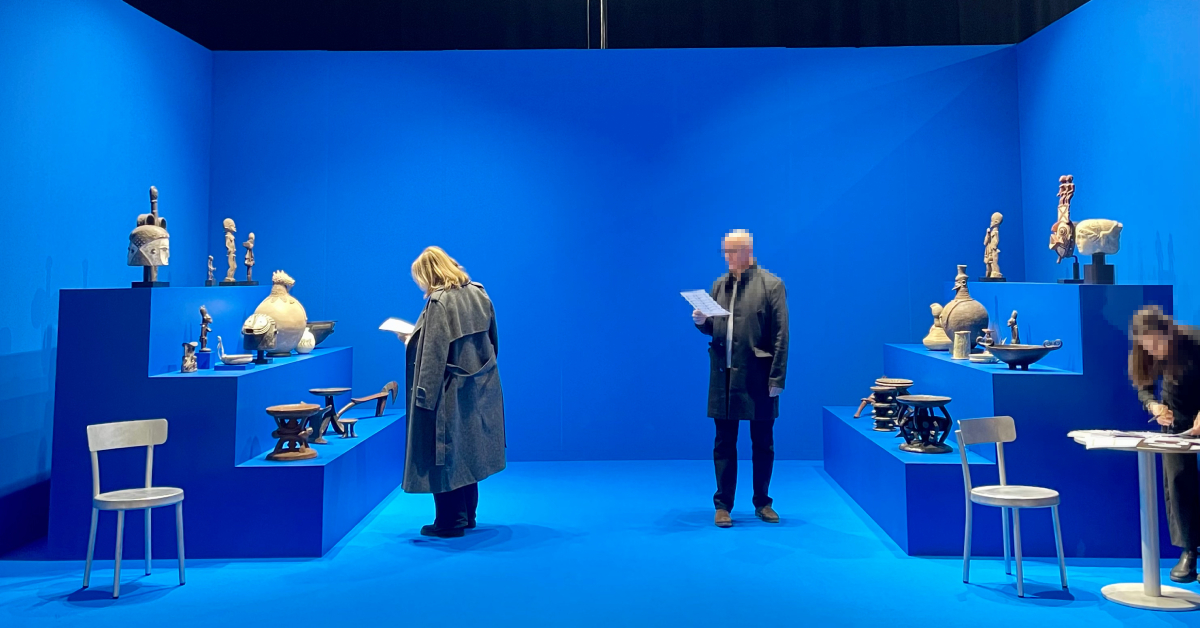
Art Genève has just wrapped up its 14th edition. Art-Beats was on site to casually take the pulse of the market, speak with gallerists, and detect any recurring themes at this year’s fair, held from January 29 to February 1, 2026, at Palexpo in Geneva.

The fair at a glance
Art Genève is arguably the second most prestigious art fair in Switzerland, following Art Basel. Often described as a “boutique” fair, it distinguishes itself through its smaller scale and strong curatorial focus. This year’s edition hosted around 80 galleries presenting modern and contemporary art.
The fair maintains a strong connection to particularly francophone regions, attracting galleries and visitors from Swiss Romandy, Paris, Quebec, and Montreal. Beyond the main booths, Art Genève also features Special Projects, dedicated to foundations, institutional collections, and private collectors, as well as Solo Shows sections, allowing galleries to focus on one artists and more curated booths.
One of the Special Projects was MAMCO Genève’s (museum of modern art) booth, which functioned as a live exhibition of works the museum planned to acquire during the fair. Beginning empty and gradually filling with newly purchased works, the booth made the acquisition process visible and inclusive — a bit unusual and somewhat refreshing gesture for an institution.

Several booths also showcased art award nominees. Luxury watchmaker Piaget continued its support by awarding the best Solo Show presentation at the fair, with the winning work entering MAMCO’s collection. Similarly, the Prix Mobilière 2026 presented seven nominated artists for their contributions to the Swiss art scene. These initiatives demonstrated how sponsorship can meaningfully strengthen collaboration between institutions and the market.

Some Art Talks topics
As every year, Art Genève hosted a series of public talks. A recurring theme was the Responsible Art Market (RAM) – Art Market Perspective, which celebrated its 10th anniversary. The discussion addressed sustainability in the art world from multiple angles, including shipping practices, tax reforms, inheritance, and the economic sustainability of artistic careers. RAM continues to provide practical toolkits focused on due diligence, provenance research, and combating money laundering within the market.

Another theme, which I found particularly interesting, was the attention to indigenous presence in contemporary art. One talk I was looking forward to — Contemporary Australian Indigenous Artists — ultimately felt more like a presentation than a discussion and lacked depth on individual practices and introduction to artists and their works. Still, it touched on important topics such as oral traditions, the cultural significance of dreaming, which connects people with ancestral narratives in connecting past and present.

Highlights of the fair
While it was enjoyable to reconnect with exhibitors and familiar art-world figures, what stood out most this year were the Solo Show presentations. Around 30 solo shows were presented by international galleries, many of which felt more focused and thoughtfully curated than standard booth displays.
As a Danish-Greenlandic artist myself, I was particularly drawn to the solo presentation of Inuit artist Pitseolak Qimirpik (b. 1986, Nunavut, Canada) at Chiguer Art Contemporain, led by owner Abdelilah Chiguer. Seeing a solo exhibition by an Inuit artist at a well-established European fair felt significant, and made me think about the positioning of indigenous contemporary artists in general.

This presentation raised broader questions about how indigenous artists are positioned within the contemporary art market. As the art world increasingly focuses on previously marginalised voices — including artists from developing regions, women artists, and Indigenous communities — it remains unclear how these practices are expected to adapt to a well-established Westernised art market system, and whether that adaptation risks compromising cultural specificity.
I don’t have definitive answers, but after an initial walkthrough, this was the booth that stayed with me, because it felt relevant — despite the fair also featuring blue-chip names such as Lee Ufan, Yue Minjun, Anish Kapoor, Paul McCarthy, and post-war figures like Hans Hartung and Karel Appel.

Other solo presentations were equally engaging. Gallery espace_L’s exhibition of Jan Steenman’s ceramic, shelf mushroom-like sculptures reflected a broader trend I’ve noticed recently: contemporary ceramics increasingly occupying space within fine art galleries. Several other galleries such as Taste Contemporary from Geneva and the art association SALTS from Basel were also exhibiting ceramic sculptures, and I am wondering if there is an increased demand for these? It seems like it.
Further Reading
- Art Genève
- Inuit Art Foundation — Pitseolak Qimirpik.
- MAMCO x Art Genève.
- Understanding Aboriginal Dreaming and the Dreamtime.
- Responsible Art Market (RAM) Initiative.
- Analyzing the Future of Art Ceramics: Key Trends to 2034.
See also related articles