Art Basel 2026 just closed its doors to this year’s fair. There has been some early reports of positive sales and appetite, while some have called the chosen works by exhibiting galleries safe and cautious. But, the article will not focus on what was sold where. Instead, I went to check out what the art is actually about, to see identify any common threads.
The fair’s Unlimited section showcases large-scale artworks and installations, while established and galleries present international art ranging from Modern to Contemporary Art. This year, Art Basel introduced two new features, Zero 10, a curated exhibit of 20 technology-driven and digital art, as well as Basel Exclusive, an new initiative to try and bring back he in-person discovery to the art market, where selected high-value works would only be revealed at the fair instead of online pre-viewing and pre-sales.
Art themes and approaching the fair
This year, I took a slightly different approach to the fair, and got a lot more out of it, than previous years. Since the art exhibited can date back to early 1900s up until today, it doesn’t make sense to look at the older and well-establish blue chip artworks. The Picassos, De Koonings, and Cy Twomblys might be interesting for tracking art sales and buyer sentiment, but these don’t tell us much about contemporary art today.
Art Basel exhibits 290 galleries with over 4000 artworks, so this is quite impossible to absorb everything if you also want to immerse yourself in the works. In order to focus on contemporary themes from the 2020s, I concentrated on works from 2020–2026.
Then, based on personal observations and research, I tried to find works that fit the expected themes:
- Art as tactile craft and authenticity through human traces
- Personal surrealism and hyperindividualism
- Tech-driven art
- Historical reclamation and decolonial aesthetics
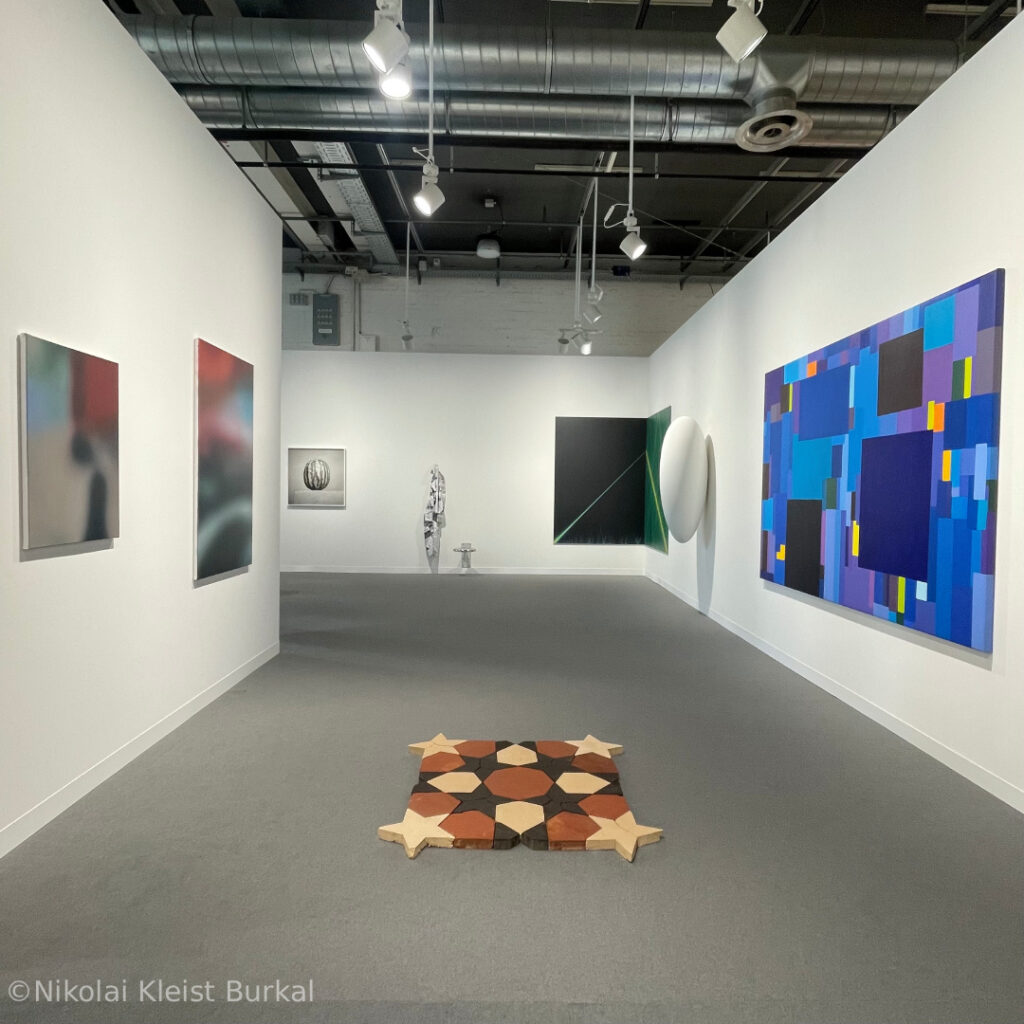
This approach was a good way to get the most out of the fair as a visitor, but it can also leave you a bit blind to other themes. So, it is important to still stay open to new observations to avoid the preconceived notion of what contemporary art is today.
Here’s what I found when applying this lens to the fair.
A look at the works!
Across the fair, there were numerous artworks across the fair focusing on traditionally craft materials such as ceramics and textiles. There were also quite a few newer works focusing on the human body and experience in a way to express memory, identity, trauma, and ancestral history.
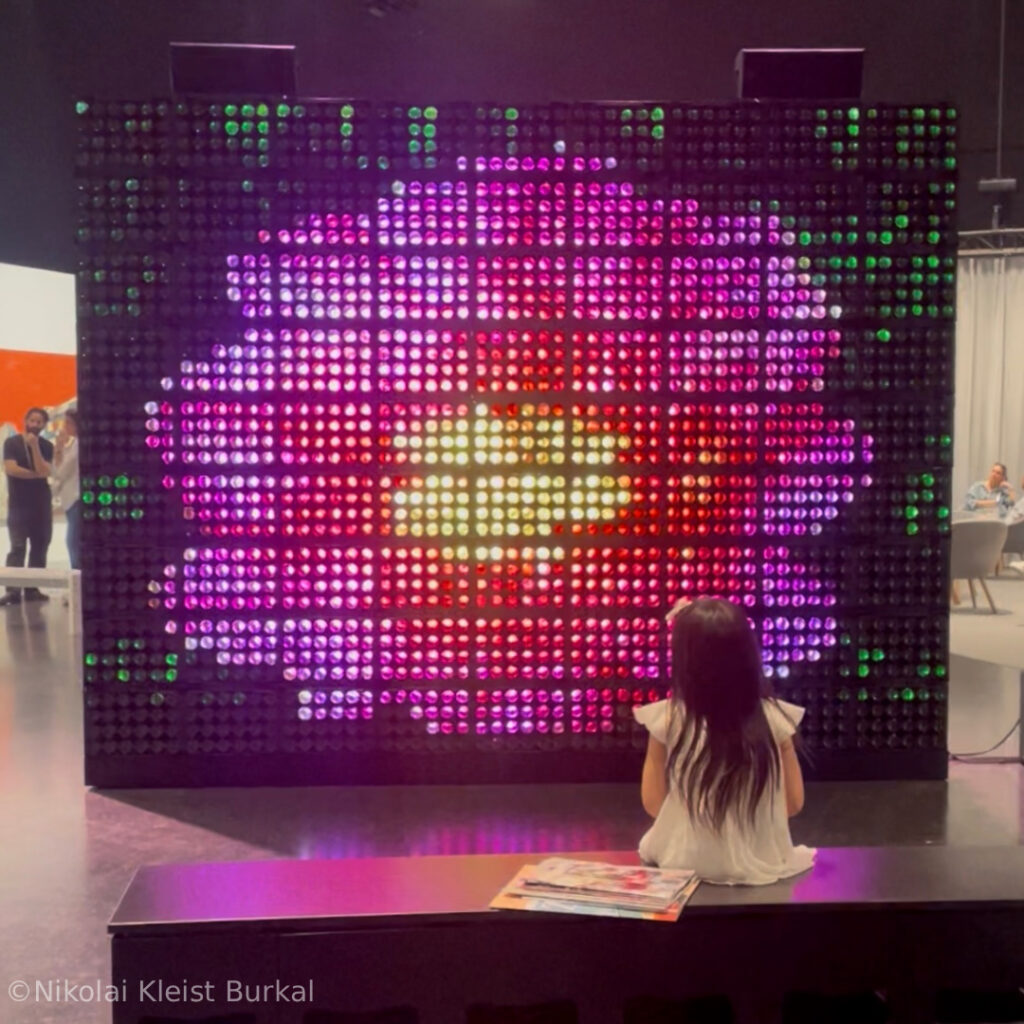
There was an increased focus on tech, by the fact, that Art Basel this year had launched its new section Zero 10 (after testing it at its fairs in Miami and Hong Kong), a curated section of 20 exhibitors dedicated to digital art and technology, as a way to close the gap between technology-drive and traditional fine art.
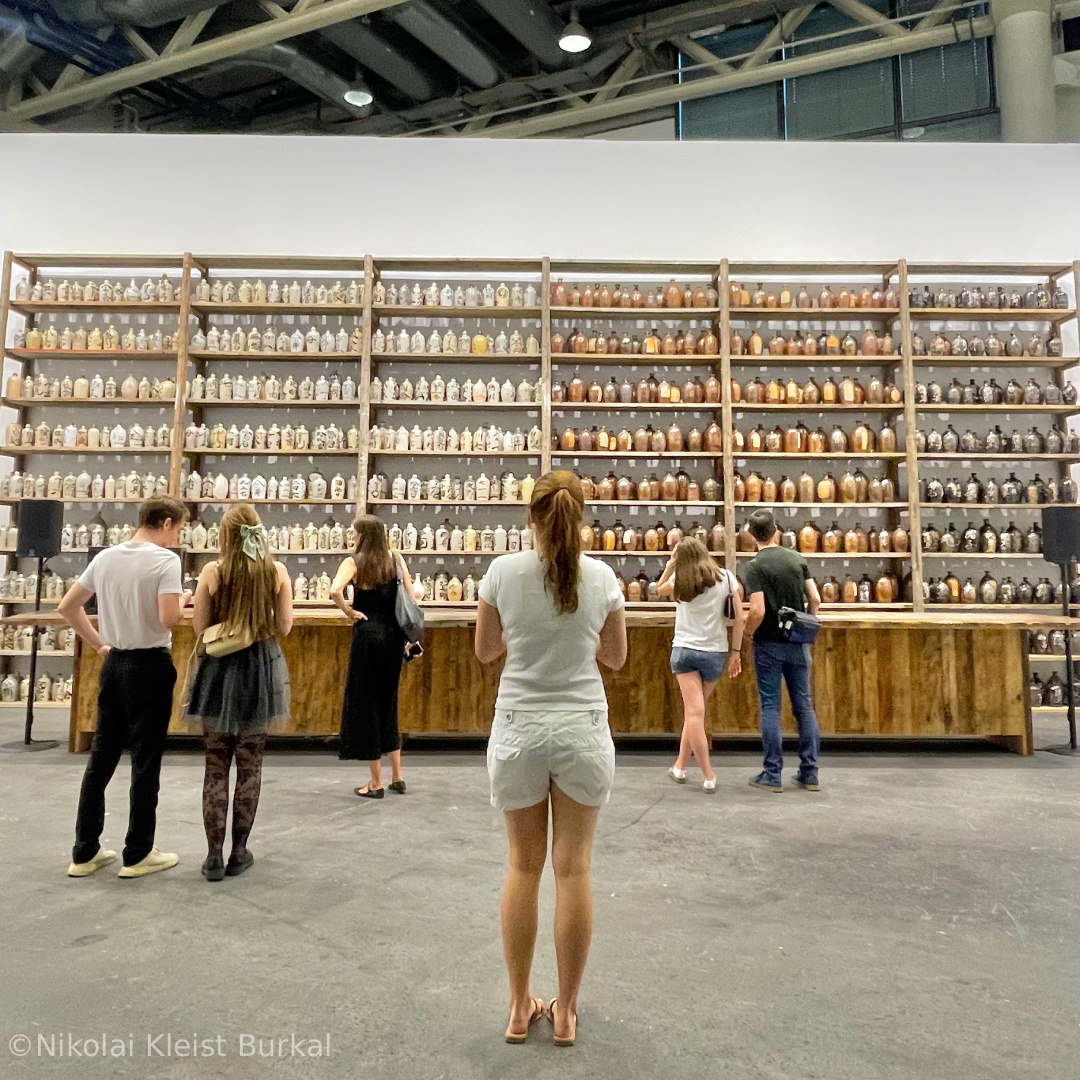
The artwork by American artist Theaster Gates’s ‘A libation in Uncertain Times’ (2024) showed an installation of a large wooden shelve containing 1,000 Japanese sake jars. The work explores the artist’s concept of “Afro-Mingei”, a way of bridging Black identity and Japanese culture through traditional crafts like ceramics.
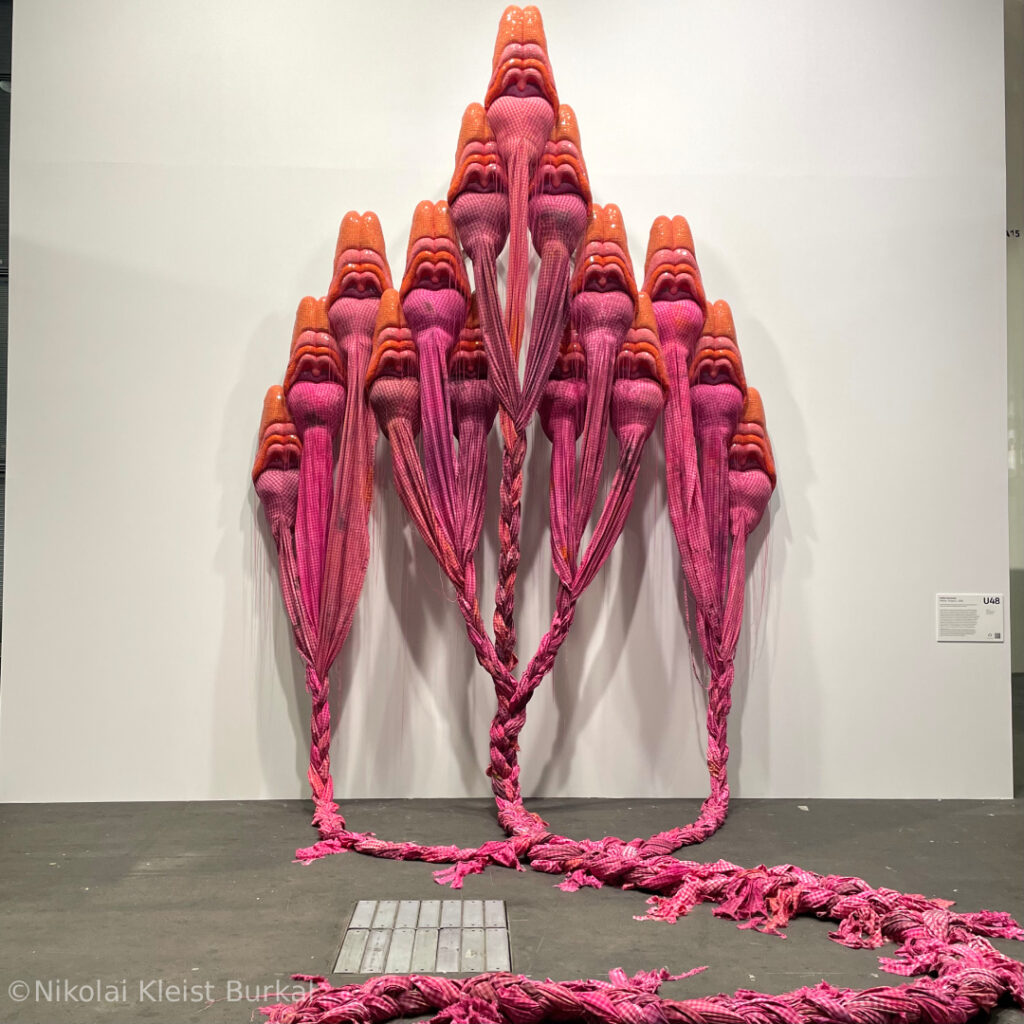
Hungarian artist Zsófia Keresztes’ ‘Mother Tongue II’ (2026) showed a large wall-mounted relief of mouths covered with pink and red glass mosaics and textiles tongues dripping down and entangling on the floor. The artwork deals with the systems of language, with the braided tongues referencing childhood memory and domestic labor. The work attempts to embody inheritance, while balancing nurture and discipline, and autonomy and interdependence.
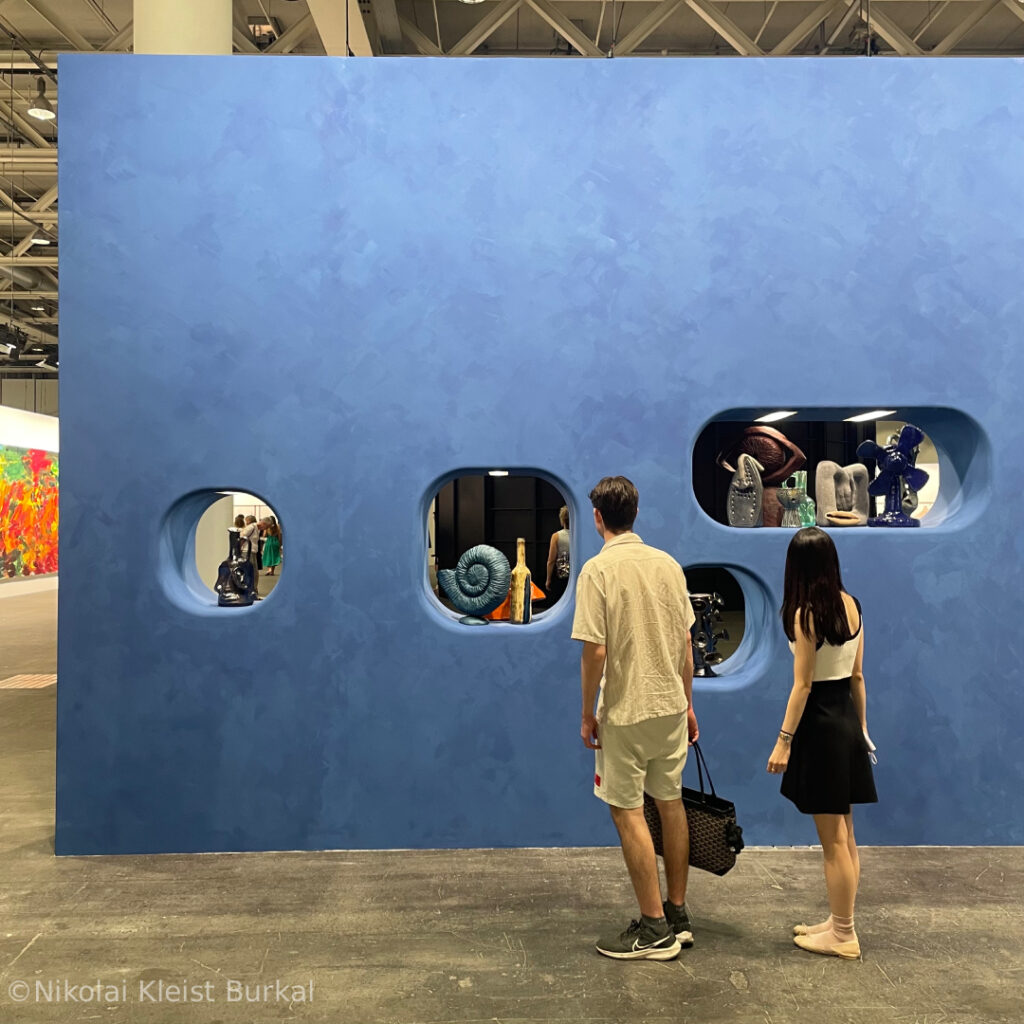
American artist Woody De Othello’s ‘Two sides that hold truth’ (2026), showed a large blue freestanding wall with arranged glazed ceramic, glass, stone, and wood to turn domestic objects into objects with anthropomorphic qualities as a way to investigate the psychological and material depths of human feeling.
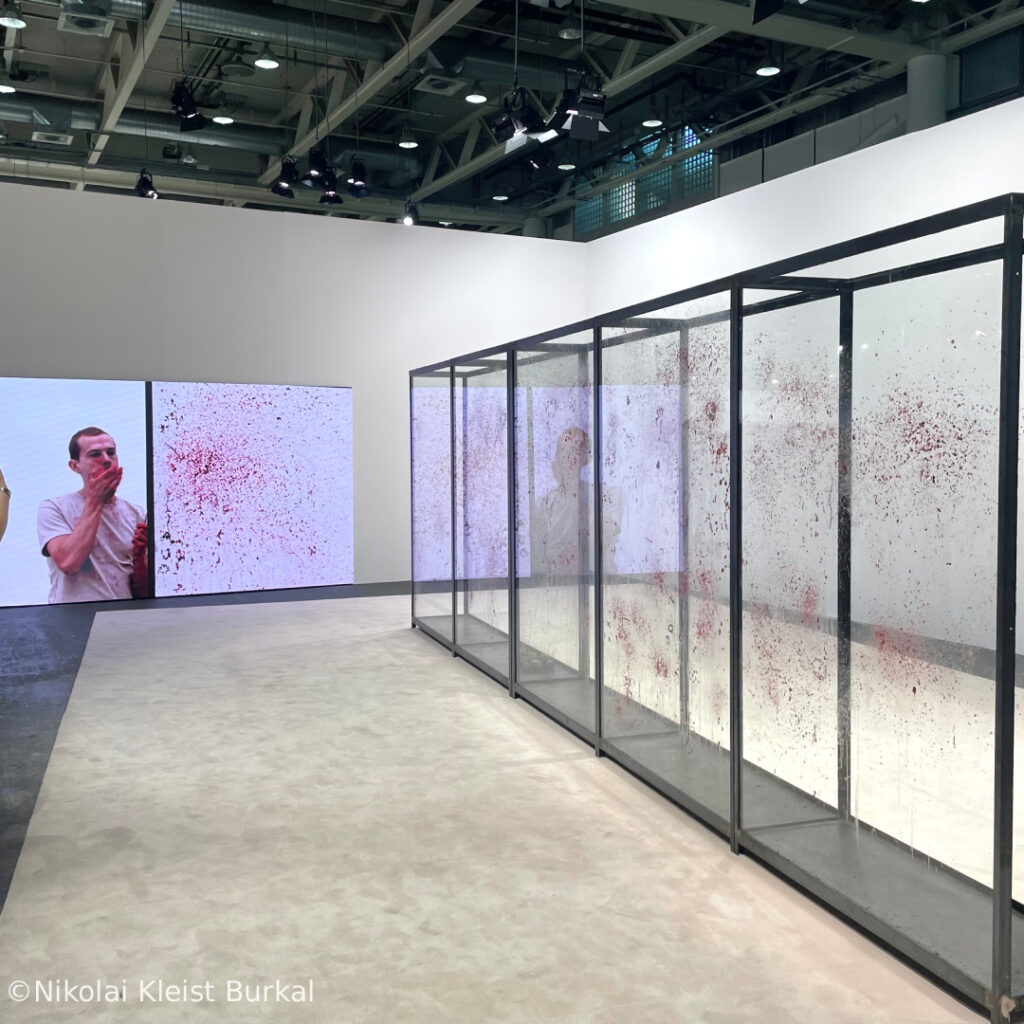
Belgian artist Edith Dekyndt’s ‘The raw and the cooked’ (2024–2026), showed a performance and remnants of the performance as video and glass cage installation. A performer chews on a beetroot and sporadically spits its juice and pulp on the glass walls leaving a crime-scene-like mark on the glass. It aims at visualising the thin boundary between human and animal, nature and culture, as well as instinct and civilisation.
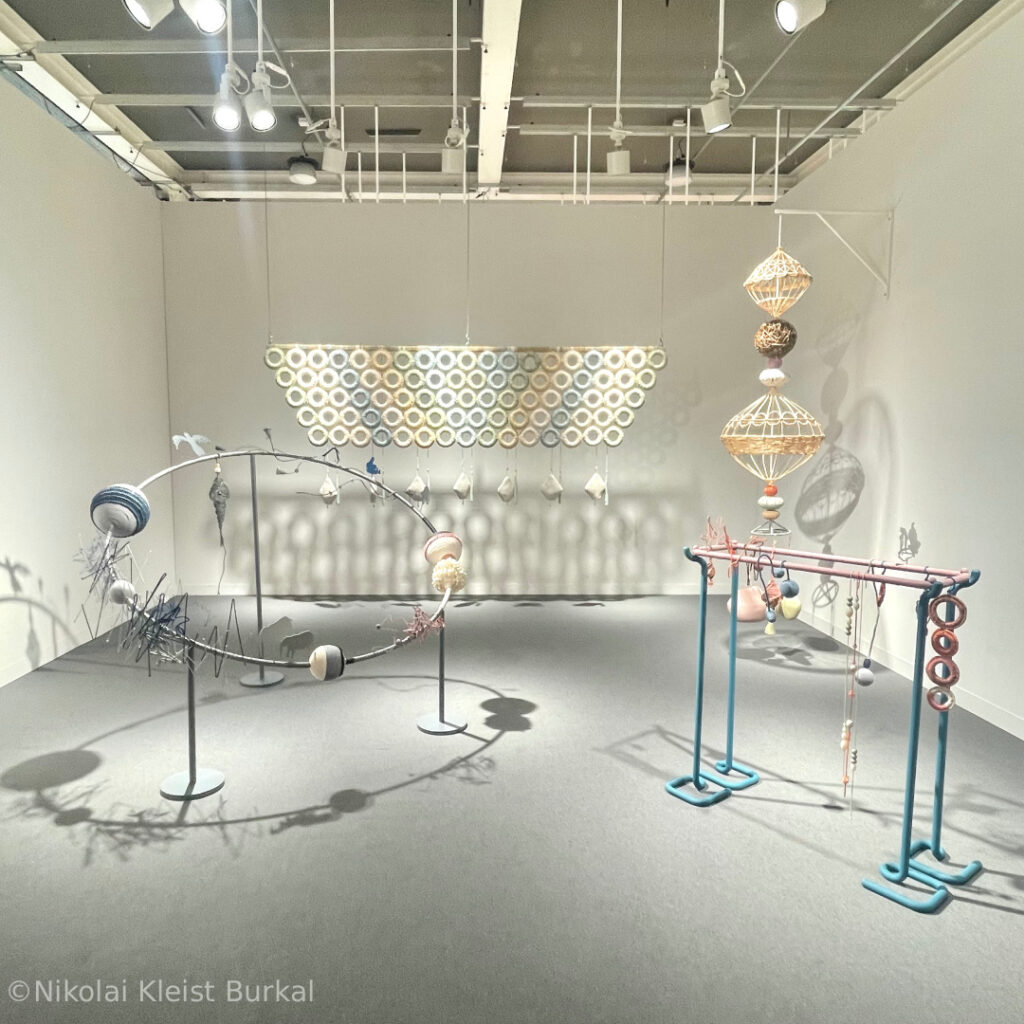
In the gallery section of Art Basel, some interesting examples include PKM Gallery’s solo exhibition of Korean artist Young In Hong’s sculpture and installation based on craft material such as textile string and weave. The works aim to blend socio-political history, labour narratives, and traditional craft techniques.
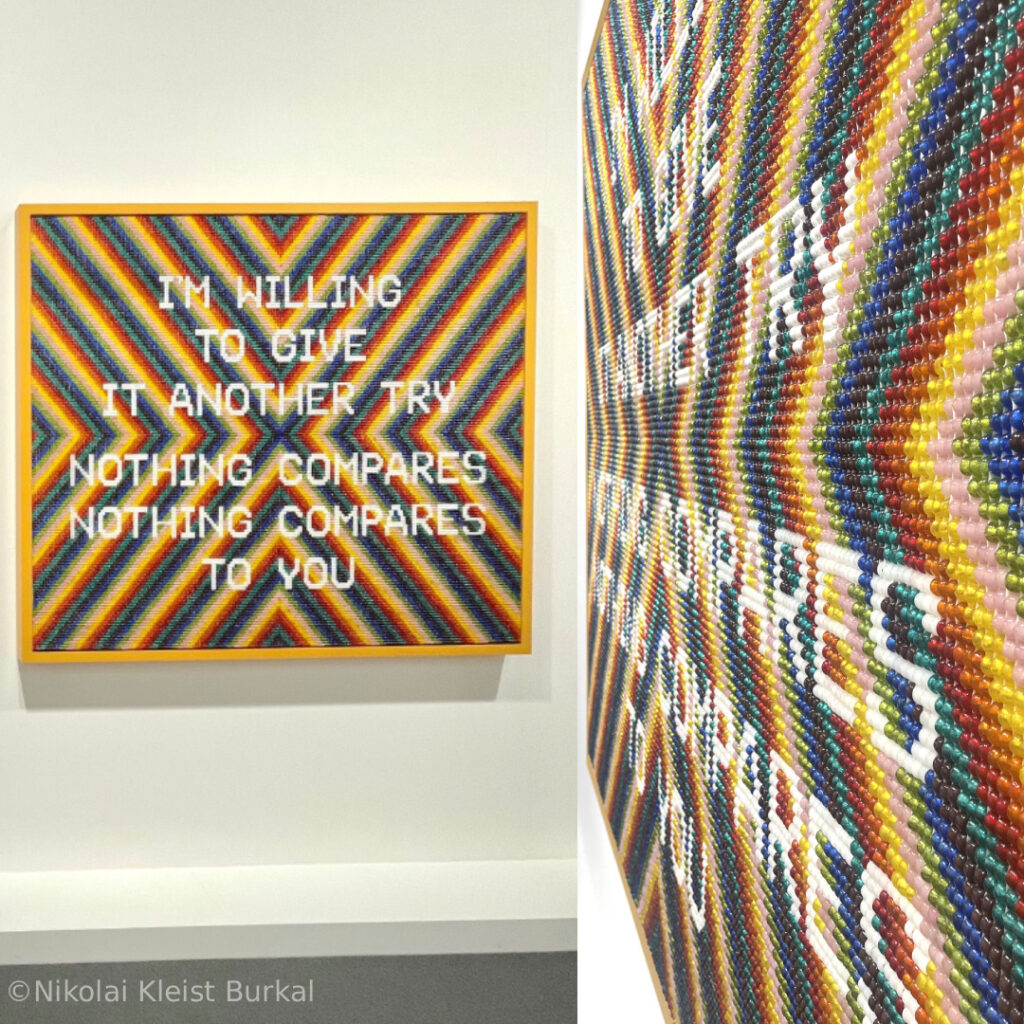
Another good example was Jeffrey A. Gibson, a Native American artist represented by Hauser & Wirth gallery. His work ‘I am willing to give it another try’ (2026) is a combination of vibrant beadwork, word art and geometric abstraction. The work is a reflection on the cycles of relationships, human longing, and the complicated search for stability between opposing truths like certainty and contradiction.
What this tells us
Looking at the contemporary art from the 2020s, what emerges from Art Basel 2026 is less a unified direction and more a fractured moment of urgent reckoning. Three impulses repeated across unrelated booths: a return to tactile, handmade materials; a focus on the body as a carrier of memory and experience; and a deliberate embrace of technology-driven practice. The fact that they coexist, not sequentially but simultaneously, tells us something about where contemporary art is right now.
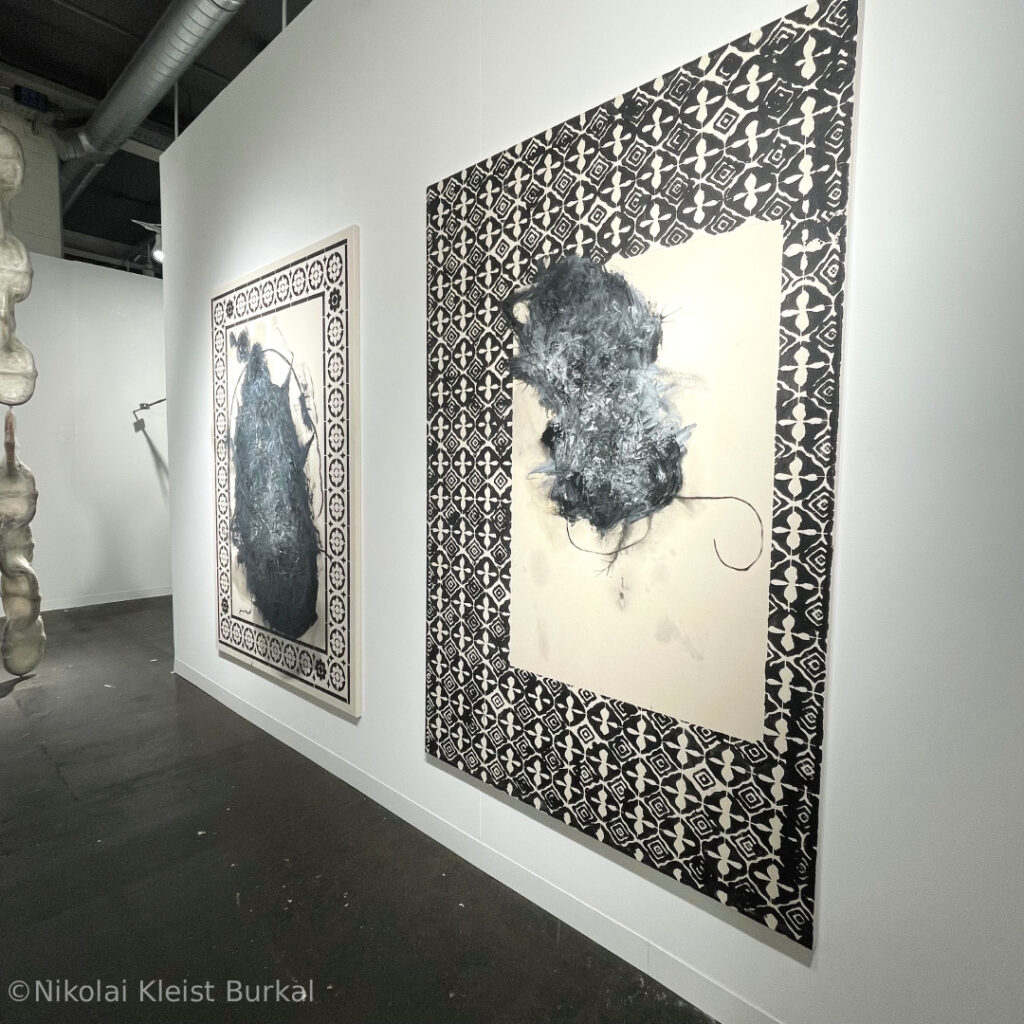
You might say, contemporary art is at a major crossroads. Art is experiencing a fundamental mutation driven by digital virility, AI, and shifting economic models. It is interesting to see a push for technology-driven art and the love-hate relationship with AI, while some galleries have taken a more cautious approach by relying on blue-chip Modern and Post-war masters. The ghost of the failed NFT boom still lingers, but digital art is clearly being taken more seriously. What this poses a threat to traditional art, compliments it, or merely co-exists peacefully with it, is a little to early to say.
Further reading
- Zero 10 Art Basel Official Program
- Theaster Gates, “Afro-Mingei” artist statement & documentation
- Young In Hong at PKM Gallery
- Zsófia Keresztes, recent works (Galerie nächst St. Stephan)
- Art Basel 2026 Unlimited Sector Program
- Zero 10 Curators Statement (Trevor Paglen & Eli Scheinman)
- Edith Dekyndt, “The Raw and the Cooked” performance documentation
- Jeffrey A. Gibson at Hauser & Wirth
- Craft and Contemporary Art 2026 (companion reading)